
A dry cigar will burn too hotly. Without the proper level of moisture, the combustion temperature of your cigar
will be too high and the smoke will be hot and acrid against your palate. The smoke may become overly aggressive and you will lose many
of the subtle flavor nuances that a properly humidified cigar would have given you. Also, the drier the cigars, the earlier their essential oils
will evaporate, which reduces their overall flavor and aroma.
Typically, for the most enjoyable smoking, a cigar should
contain approximately 12-14% of its total weight in moisture. This corresponds
to 60-70% relative humidity. "Relative humidity" (RH) is a measurement
of the amount of moisture in the atmosphere compared with that of complete
saturation, regardless of the temperature.
The primary criterion in proper cigar storage is achieving
a stable relative humidity within this ideal 60%-70% RH range. The secondary
requirement is to store the cigars at temperatures below 75 degrees Fahrenheit
and, thirdly, in a darkened environment. Doing these three simple things
allows your cigars to not only be stored well, but also to age well, resulting
in cigars that will draw easily, burn steadily, and share their optimum
flavor and nuances with your palate.
Humidors
A
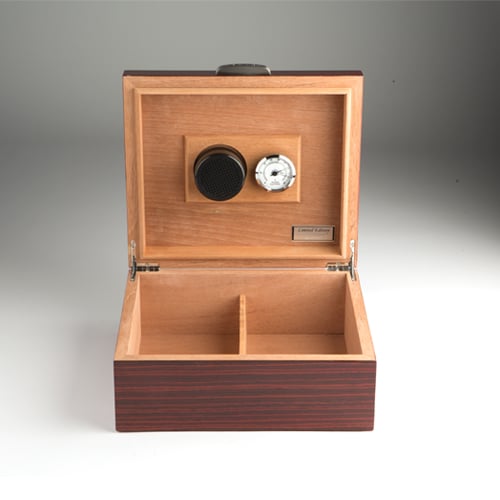
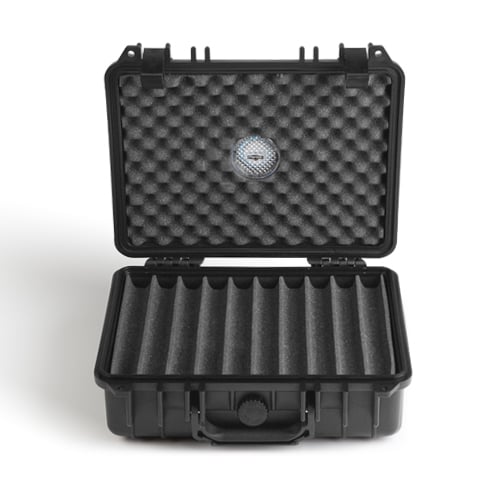
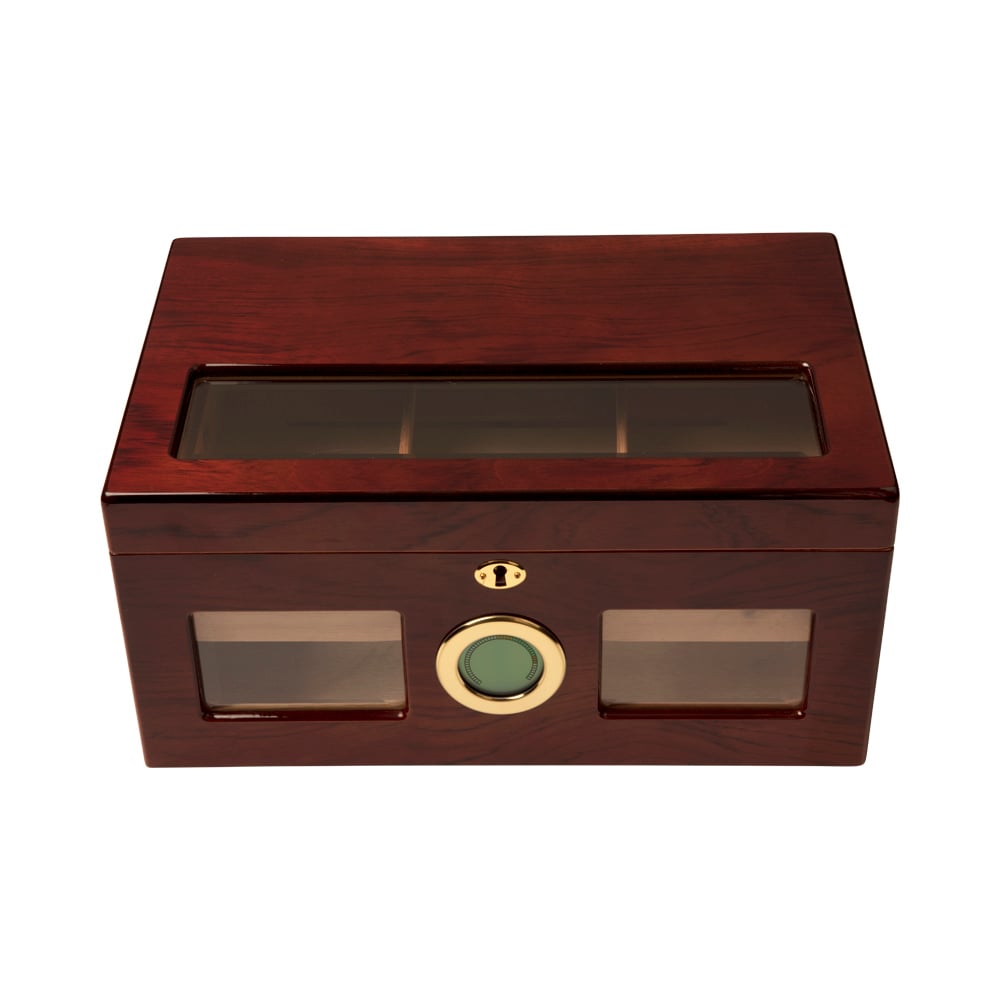
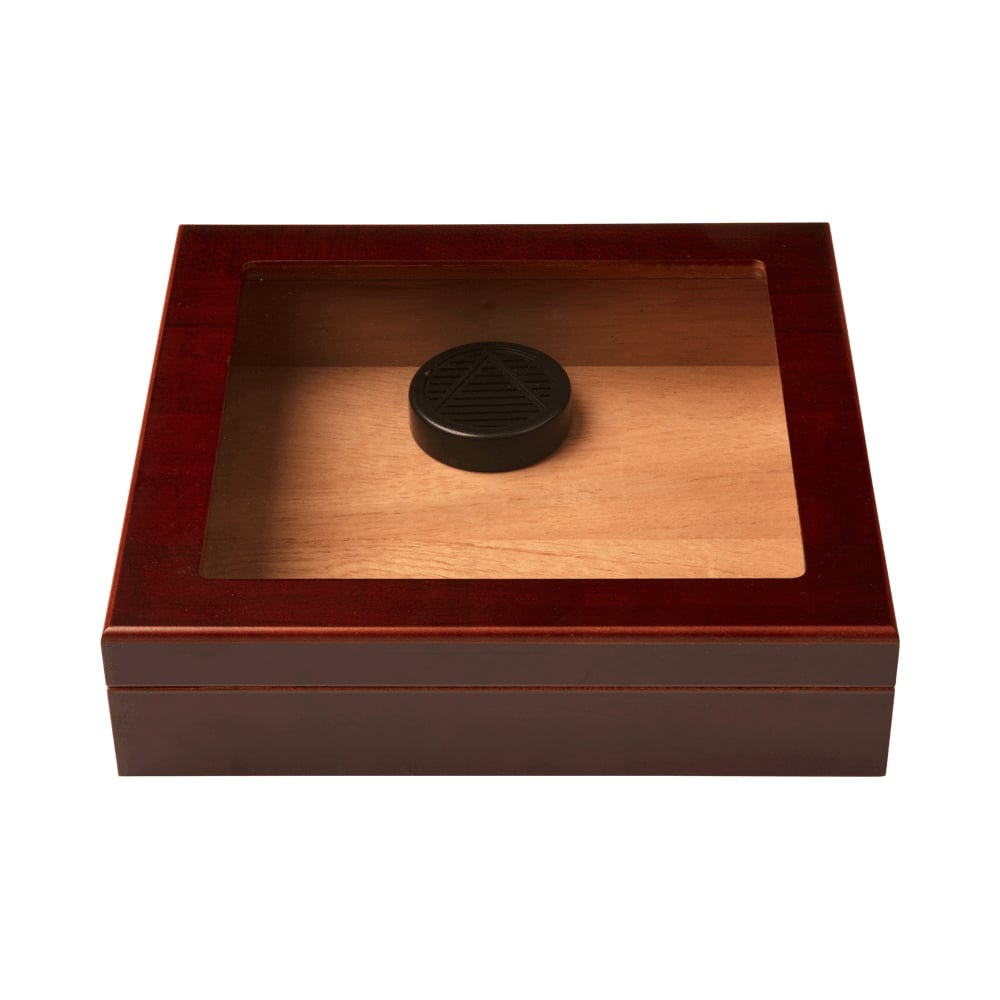
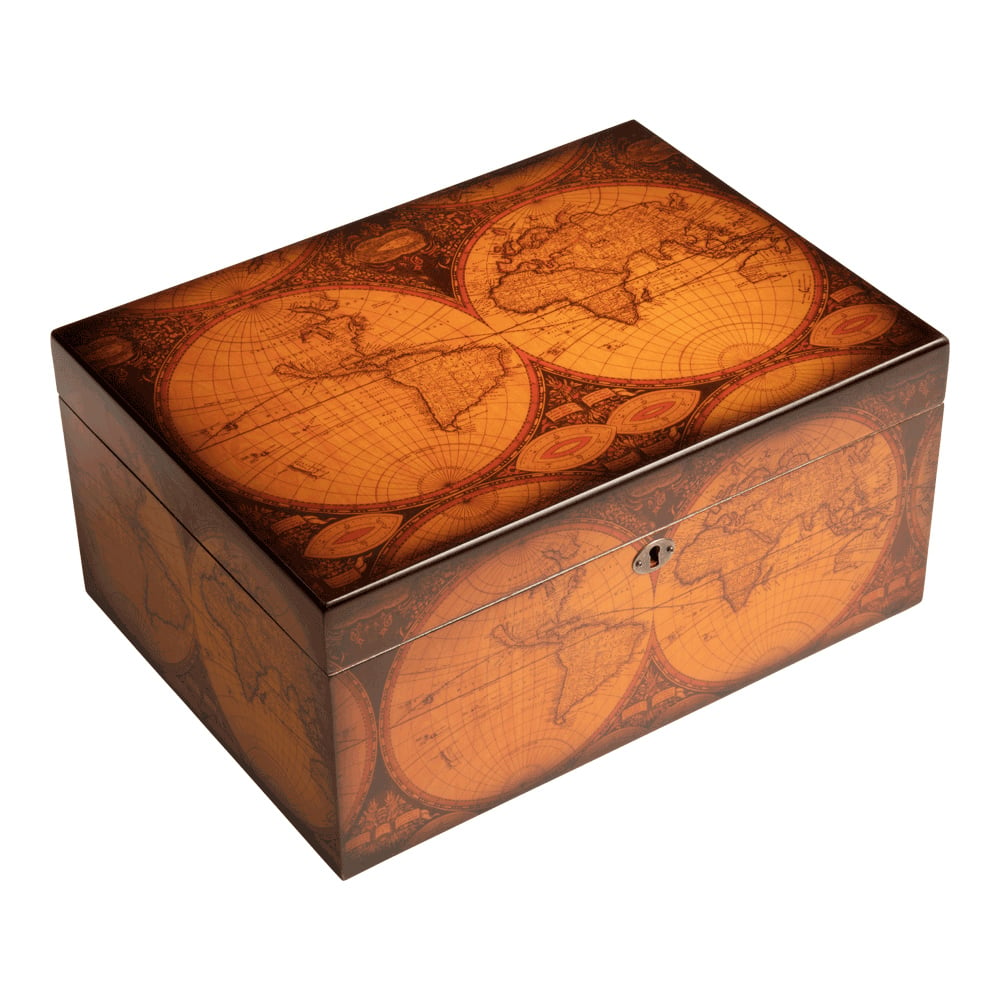
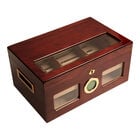
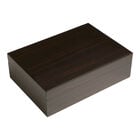
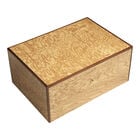
humidor is simply a well-made box designed exclusively for storing cigars.
Many of the better ones have lift out trays and dividers, which are of great
benefit. These features help you organize your cigars and allow easy access
to the cigars you might wish to smoke at any given time.
Humidors come in a wide variety of sizes, shapes, and colors. Some are simple, classic
designs, while others are wildly exotic. Humidors can be quite expensive,
so you should view a wide variety and take your time selecting one. A good
humidor should not only serve your needs, but aesthetically pleasing as
well.
Pre-Purchase Humidor Tips
Rarely are high-quality humidors inexpensive. Be prepared to spend $250 or more
for a 150+ cigar humidor. If you can not afford to spend that much, and
are not extremely humidor savvy, my advice is to not buy one until you can
afford one. Using a "Tupperdor" or "Igloo or" is far
less expensive, and less aggravating than trying to stabilize an inexpensive
humidor. Both the inexpensive, non-traditional storage methods are discussed
below, in the "Alternative Cigar Storage Methods"
section.
Does that mean there are no good humidors for under that
price? No, there are some very good humidors on the market for less than
$250. However, you need to be extra critical when purchasing one, and you
should not expect the majority of them to be as stable or as well made as
those priced higher. If you live in an area where the ambient climate is
close to an ideal cigar RH, then this probably won't be as important. However,
if you live in place where the ambient humidity drops below 45% RH you need
to be more concerned. A good humidor will not only protect your cigars,
but will quickly become a cherished heirloom. If you are interested in economical
cigar storage, you will most likely prefer to maintain your cigars in a
plastic container.
When selecting a humidor, it is best to select one with
5/8," or greater, wall thickness. This thickness provides a good buffer
between the outside ambient climate and your prized cigars.
There are many exceptional wood choices, but the standard
is mahogany. You will never go wrong selecting a high-quality mahogany box.
Spanish cedar liner is a big plus. It serves three functions:
First, it acts as an additional buffering agent because
the wood is absorbent and regulates at 60%-70%, along with your cigars.
Second, it helps to discourage beetle infestations. Beetles and
other pests dislike the bitter flavor of Spanish cedar.
And finally, Spanish cedar imparts a slightly spicy flavor
to your cigars as they age. This taste is appreciated by most smokers.
If you do not like this flavor note, do not hesitate to
forego the Spanish Cedar lining; it is not essential. However, western cedar,
red cedar, and/or aromatic cedar are NOT suitable substitutes for Spanish
cedar. These woods will ruin the flavor of your cigars.
Look for a humidor with quality workmanship throughout - tight
seal, good corner joints, perfect hinge installation, etc. A good humidor
will be heavy and solid, and this is essential to prevent warping. Remember,
a humidor endures a tremendous amount of stress. For example, in the winter
where I live, the heat runs constantly. This results in an indoor ambient
humidity of roughly 30%, yet my humidors maintain a constant near 67% on
the inside. This type of immense relative humidity delta puts a tremendous
strain on the wood and the joints of any humidor.
Breaking in your New Humidor
The first step in breaking in a new humidor is to be absolutely certain that
your hygrometer is accurate. To do so, perform the "Salt Calibration
Test" included in the Hygrometer section
below.
A brand new humidor requires time to reach the appropriate
humidity. Depending on your climate and how dry the wood is, this can take
as little as a few days to upwards of a few weeks.
You can speed up this break-in period by wiping the insides down
with a towel moistened with distilled water. BUT be very careful to not
overdo it: if you do, you will cause an ugly water stain on the inside of
your pristine humidor. Also wiping the inside will always cause the interior
liner's grain to rise. Personally, I recommend you DO NOT do this; it is
much better to be patient and allow your humidor to reach the appropriate
humidity on its own.
It is not necessary to initially charge a Credo with propylene
glycol (PG). It comes from the manufacturer pre-charged, as do most humidifiers.
If in doubt, you should ask the tobacconist or manufacturer. If they don't
know, then go ahead and rinse the humidifier completely, allow it to dry,
and then begin with a 50/50 charge of PG and distilled water. By the way,
a good indicator of whether the unit came precharged is by how it was packaged:
When wrapped in a moisture retaining barrier they are almost always precharged,
when just place in the a box or left in an open bin they are not.
After your humidor reaches 63% or so, it is a good idea
to introduce your cigars to it. A humidor will stabilize better and more
evenly when 75%+ of its volume is full. Try to maintain this volume of cigars
at all times if possible. Open- air space inside a humidor is your enemy.
(By the way, this is an excellent and legitimate explanation to give your
spouse as to why you MUST buy another two boxes of your favorites cigars.)
Lift-out trays and moveable
dividers are a big plus when selecting a humidor, particularly if they are made of Spanish cedar.
Make certain that there is room in the lid for the humidifying
device you will utilize. You don't want wasted space simply because your
Credo hangs too low in your humidor.
Also, make certain that all exterior sides of the humidor
are sealed, including the bottom.
Remember that size claims of being a 25/50/75/100/200+ capacity humidor are typically
based on corona/corona- extra-sized cigars. If you primarily smoke large
cigars, it is important to adjust these numbers as appropriate. Also, if
you are buying the humidor via mail order, ask for the inside dimensions
so you can confirm that it has the storage volume you desire.
Maintaining your Humidor
Add distilled water to your humidifier when the relative humidity begins to dip. After the humidor has been
stabilized, this dip should occur slowly and steadily... 69%, 68%, 67% and so on. Typically, I add distilled water when I hit 64% or
so. Remember DO NOT saturate the Credo, but only moisten it! This is the biggest error most new humidor owners make. Keep in
mind that a Credo not only raises the humidity to 70% RH, but it also lowers the humidity when it exceeds this level. Therefore it
is essential that there is room left within the Credo's volume to absorb the excess moisture
if necessary.
Only use distilled water. Tap water has chemicals and minerals that you do not
want in contact with your cigars as they age. Also, tap water contains organics
and is prone to developing mold. Distilled water is the only readily available
water that is free of both mineral and organic impurities.
Do not be anal retentive about the RH humidity. Any number between 64% and
72% is fine; truth is, every cigar smokes differently. Some will be best
at 68%, while other less-tightly-rolled cigars will burn better at 72%.
Some people like their cigars even drier and try to keep them closer to
60%. Ignore what everyone tells you about 70/70 and experiment with slightly
drier and wetter humidity levels until you find what you like best. Personally,
I prefer 65%-67% RH as the ideal relative humidity.
Temperature control is not nearly as critical as the humidity.
Any temperature between 50-75 degrees is fine. A couple of notes though;
at the lower temp, the aging process slows down, while at the higher temp,
the hatching of the dreaded tobacco beetle is a potential risk. More importantly,
always keep your humidor out of the sunlight - being bathed in the sun's
rays drastically escalates the internal temperature within the box. Also,
never place it on a television set or near a stereo system, as any such
electronic device will generate considerable heat.
Totally DISREGARD any table or advice explaining that the
ideal humidity for storing your cigars changes depending on the temperature.
This is a myth that sadly has been published in some otherwise respectable
publications. It is based on the principles of absolute moisture content
and not relative humidity. 70% relative humidity is 70% relative humidity
regardless of the temperature (hence the term "relative").
Humidifiers
Humidifiers maintain the desired relative humidity within your humidor. There are two
primary types of humidifiers: Active and Passive.
Active
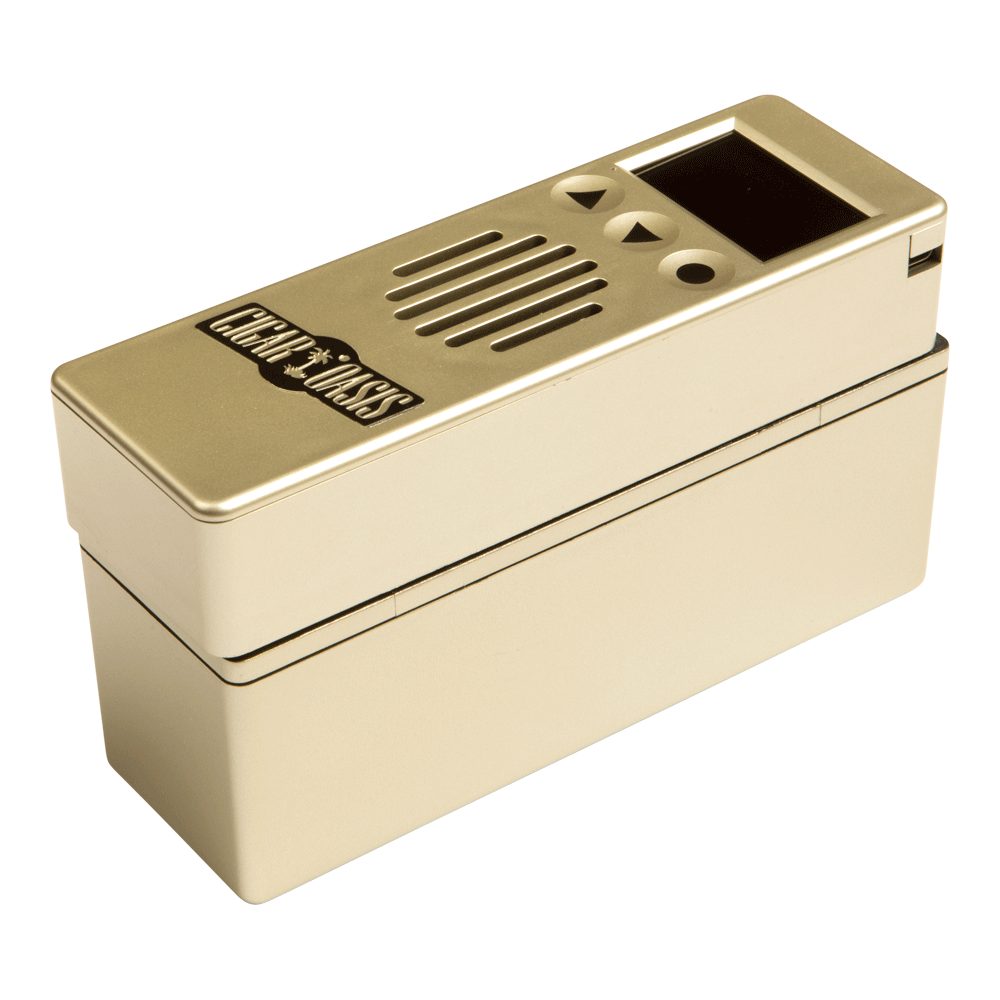
humidifiers are electrically powered and typically utilize
a built-in electronic sensor to determine whether they should add moisture
to the air. A few top-end units will also extract extra moisture content
from the air, but most do not. Typically, these units are very expensive
and are intended for use with large furniture-size humidor cabinets. However,
there are a few on the market for smaller humidors.
One distinct advantage of active humidifiers is that you can easily set
most to maintain a lower relative humidity if you so desire.
Passive
humidifiers do not rely on any power whatsoever, are of simple
design, and utilize basic vapor conduction to regulate relative humidity.
These devices are typically inexpensive and serve almost everyone's humidifier
needs. Although not as sophisticated as active humidifiers, passive ones
are very capable of providing a stable environment for your
cigars. Not only are they utilized in desktop humidors, but in large cabinet-size
ones as well.
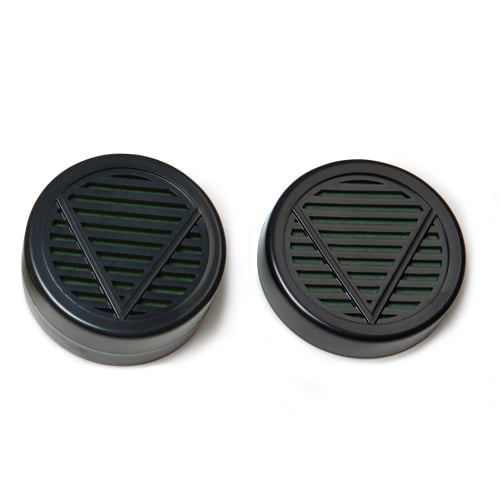
Commonly passive humidifiers are referred to as "Credos" regardless of
their actual brand. This is because the Credo Company manufactures the unit
that is regarded as the benchmark for passive humidifiers. It is kind of
like all tissue paper being referred to as "Kleenex".
Passive humidifiers are traditionally constructed of sponge,
clay, or oasis florist foam encased in a perforated container. The foam
is moistened with distilled water and then placed within the humidor. Of
the three materials, clay is the most durable, while the oasis foam is the
best for regulating because of its open-cell structure, which allows it
to retain large quantities of water. Any of the three are functional, but
personally I recommend the green oasis florist foam.
Passive humidifiers control the relative humidity within
your humidor by hydroscopic interaction with the air's moisture content.
In lay terms, it basically expels moisture from the humidifier when the
ambient relative humidity is below 70%, and absorbs water when the ambient
relative humidity is above 70% RH. It accomplishes this task via the chemical
propylene glycol (PG), which acts as a hydroscopic control agent. Most passive
humidifiers are charged with a 50/50 solution of PG and distilled water.
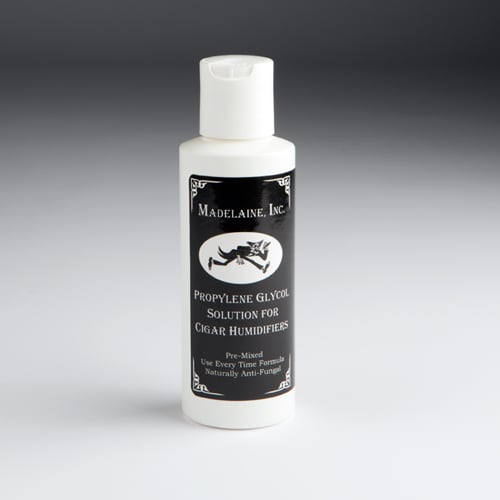
Propylene glycol (PG) is an inert chemical that is used in a wide range of products,
including animal feed, hair-care products, medicines, etc. It is safe to handle and consume if you so desire. It can be bought at most cigar stores but
typically is labeled as "Regulating Solution" and sold for upwards of $20 for two ounces. I suggest you buy it from your local pharmacy
instead; it usually can be bought from the pharmacist's counter for about $8 a pint.
When the humidity in your humidor dips below 70% RH, the PG expels the water
contained in the humidifier. When the relative humidity is over 70%, it
absorbs water. This is why it is critical to never overfill your humidifier,
as it needs room left over in order for it to absorb excess moisture if
needed. Over time, the PG will expend all of the water contained within
the humidifier (assuming you live in area with a lower than 70% RH) and
you will need to add more distilled water. You do not have to add more PG
though, as it will remain in the humidifier until you rinse it out. In addition
to its regulatory properties, PG also serves as an anti-bacterial agent
that will help prevent molding.
Almost all commercially available humidifiers come pre-charged
with PG, so there is no need to add any in the beginning. If in doubt, you
can rinse it thoroughly, allow it to dry, and recharge it with the 50/50
solution. Over time, your PG will slowly evaporate from the humidifier,
so I recommend you rinse clean and recharge your humidifier with 50/50 once
every year or two.
Making an Oasis Foam Passive Humidifier
WET Oasis Foam - This is the type used for live floral arrangements.
Do not use DRY Oasis foam; it will not work. WET Oasis foam is available
at all florists and most craft stores.
Propylene Glycol (PG) - Chemical available from your pharmacist's
counter for roughly $8 a pint. This is the "secret ingredient"
in all regulating agents such as Credo's Special Care solution.
Distilled Water - Available at most grocery
stores for about a buck a gallon. Any Container - Travel soapdish, film tube, etc.
Take a travel soap dish and drill numerous holes to allow
substantial airflow throw the walls of the container. Cut the foam into
a piece small enough to fit loosely into the container; it must be small
enough to allow for adequate air circulation around its surface. Mix a
50/50 solution of PG and distilled water and moisten your oasis foam with
the mixture. Remember MOISTEN - do not saturate!!! And voila'! - a homemade
"Credo" for much less than those commercially sold. Amazing,
huh? Also keep in mind that it takes a couple of days for the humidifier
itself to stabilize before it can begin to regulate your humidor properly.
Additional Notes regarding Humidifiers
The size/number of humidifiers necessary depends on a number of things: ambient climate, your humidor's
construction, number of times a day it is opened, how many cigars are in it, etc. But a good rule of thumb is:
40 or less cigars - 1 Credo Rondo
40 to 100 cigars - 1 Credo Precision 70
100 to 200 cigars - 2 Credo Precision 70s
A humidifier can never be too large: bigger is better with an emphasis towards more surface area rather than thickness.
Always remember; never overcharge a humidifier with distilled water.
Always use distilled water. It will prevent clogging and is far less likely to
cause molding in your humidor. I am always amazed by people who say their
tap water is "this and that" filtered perfect H2O... Don't be
so cheap! You are storing cigars worth hundreds of dollars so the extra
$0.99 a gallon for distilled water isn't going to kill you.
All passive humidifiers require a couple of days
to settle in after being initially charged. Do not expect your humidor to be at 70% RH in just a few hours.
Most importantly, all humidifiers are going to regulate within a range of the desired RH; do not wig out over yours
being a few percentage points off.
Advancements in Passive Humidifiers
In
recent years, a couple of alternative to regulated foam-style passive humidifiers
has been introduced to the cigar smoking public.
The first is units utilizing Crosslinked Polyacrylamide Humidity Crystals. These are beads of silica gel bound with a salt derivative
designed to retain and expel large quantities of water. When treated with Propylene Glycol these dioxide beads work to maintain the same basic
relative humidity hysteresis loop of 70% RH. Many people swear by the performance of these new crystal based humidifiers. Two distinct
advantages are they require less refilling and, when packaged in a clear housing, allow for an easy visual cue when additional water is required.
The second is the use of newly developed hybrid latex foams
as the unit's "sponge." Many are capable of holding extremely
large quantities of water while others actually regulate the RH without
the use PG. The controlling agent appears to be the foam's cellular membrane
structure. I have limit experience with these units, but they seem to provide
a very stable RH.
Hygrometers
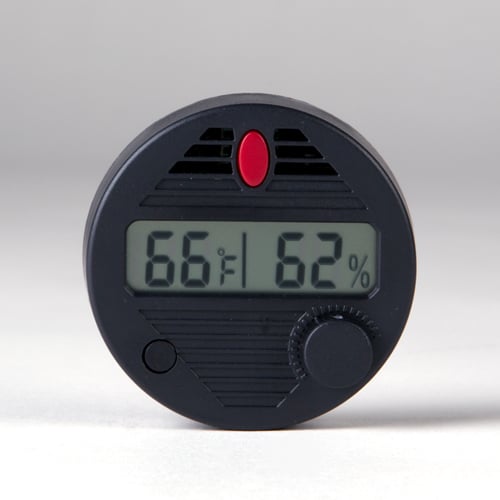
Hygrometers measure relative humidity and are commonly used by cigar smokers within
their humidors to verify that the proper humidity level is maintained.
Both mechanical and electronic hygrometers are available.
Typically, the mechanical ones are more attractive, while the
electronic ones tend to be more accurate. But this is not always the case.
Sadly, many hygrometers, both mechanical and electronic, are grossly inaccurate
and require either adjustment or replacement. One of the easiest methods
of verifying the accuracy of your hygrometer is to perform a "Salt
Calibration Test."
Without boring you with the chemistry of why, let me simply
state that this test will always result in achieving the exact relative
humidity level of 75%.
Salt Calibration Test
Materials
required:
- Tablespoon of plain Table Salt (NaCl - like Mortons)
- Empty Wide-Mouth Jar with lid (like an old Mayo jar)
- Bottle Cap (like those on a Snapple bottle)
- Coffee Stirrer (or other thin object with which to stir)
- Distilled Water
- Your Hygrometer
Place the tablespoon of salt within the bottle cap. Slowly add distilled water to the salt while stirring with the coffee stirrer.
You want to add just enough water to moisten the salt so that it becomes a thick paste. Do not add enough water to dissolve the salt!
Place the bottle cap with salt gently into your wide-mouth
jar then add your hygrometer. Make certain that the sensor is exposed and
not being blocked by the sides of the jar.
Seal the jar - this test will not work if there are any
leaks. Then put the jar in a place out of direct sunlight and with a stable
temperature.
Leave undisturbed for a minimum of 8 hours.
Check the reading on the hygrometer through the glass jar.
It should read on or near 75% RH.
Due to the salt paste reacting with the confined air the
ambient RH within the jar will be exactly 75% RH. Most inexpensive hygrometers
are only accurate to within 3% of 75% RH, so do not be surprised if yours
reads 72% or 78% RH. Whatever it reads plus or minus from the 75% benchmark
is the amount of error of your hygrometer.
What you do about an error depends on the circumstances.
If your hygrometer has an adjustment potentiometer then, by all means, try
to tweak it to exactly 75%. You should repeat the Salt Calibration Test
after making any adjustments. If your hygrometer can't be adjusted
but the reading is close, then I suggest you don't worry about it; just
remember that your hygrometer is X% off - either high or low.
If the reading is grossly in error and you are unable to
adjust it, I suggest you replace it.
And finally, let me say that hygrometers are not really necessary. You will
find, over time, that you be able to judge the relative humidity within
your humidor by simply touching and smoking your cigars.
Alternative Cigar Storage Methods
A humidor is NOT essential to cigar storage. In fact, there are many inexpensive and effective
methods for maintaining and aging your cigars. Three of the most popular are "Tupperdors",
"Igloodors", and "Fridgadors."
A "Tupperdor" is nothing more than
a plastic, resealable food container. You can use Tupperware or any other similar product. These are inexpensive and very effective. Simply add a humidifier
and you are all set. Many people place those cedar separator sheets that come from boxes of cigars on the bottom of their "Tupperdors" to
introduce the element of Spanish cedar. Remember to store your "Tupperdors" in a cool, dark place.
An "Igloodor" is simply a large ice cooler like those made by the Igloo or Coleman companies. They come in a wide
variety of sizes with the most common being a 48 qt. model (but I know many people that utilize the giant 128 qt. Models). This is an ideal way
to store full boxes of cigars very inexpensively. Some people line the interior by attaching Spanish cedar with a non-toxic, scent-free adhesive,
and others even create dividers. You can make a large humidifier, but one of the easiest solutions it to place a trimmed brick of oasis foam in the
small plastic tray that many coolers have. "Igloodors" are also commonly referred to as "Coolerdors."
A "Fridgeador" is the ultimate in alternative cigar storage. Basically you utilized an unplugged refrigerator or freezer
to store large quantities of cigars. A standup freezer is ideal with its well-spaced, ample shelves as it allows for easy organization of your cigar collection.
There are only two minor drawbacks to using these for long-term cigar storage:
1) They are more susceptible to becoming over-humidified because their plastic walls do not help
buffer the relative humidity. So it is extra important to not overcharge your humidifier. Because of the risk of higher moisture levels, you ;need to
be alert for the higher potential of mold forming.
2) They do not breathe as a traditional humidor does. Therefore, they will trap the ammonia a
nd off-gases generated by your cigars aging within. To alleviate this problem, you should open them at least once a month to allow for the
exchange of fresh air.
Cigar Aging
I
wholeheartedly subscribe to the theory that aging has a critical impact
on a cigar's body and flavor. Initial aging after their rolling is essential
to allow the cigar to dry and stabilize. Not only will this greatly improve
the flavor, but also greatly improve the burn and draw. Stabilization takes
only 6 to 8 weeks, however allowing your cigars to age even longer will
let the flavors of the blend meld and mellow into a more harmonious smoke.
A cigar's complexities and nuances will be greatly enhanced with long-term
aging in a proper environment.
On the other hand, I am also a firm believer that cigars
do not perpetually age for the better. Every cigar eventually hits its peak,
and from there on it is downhill. So it is just as important not to overage
your cigars, as it is to age them in the first place.
The younger the cigar, the more drastic the impact time
has upon it; 3 months can mean a world of difference to a freshly rolled
cigar, whereas 3 months are negligible when dealing with 5-year-old cigars.
Over time, your cigars will shrink slightly and you will
be able to move their rings up and down their length uninhibited by friction.
This is a classic telltale sign of a well-aged cigar, and one that will
most likely be an optimum smoke. Not only will it burn and draw better,
it will taste smoother and share its nuance with your palate.
Another telltale sign of aged cigars is plume (also called
bloom). This is a light, whitish-gray powder that caused by the cigar's
essential oils drying on its surface. It is considered a very good sign
that the proper aging is taking place. Not all cigars develop plume, but
those that are heavy in oils generally do over time. Cigars exhibiting plume
are typically exceptional in flavor. Well-aged cigars are a cherished commodity among most cigar connoisseurs
and a luxury that, sadly, most smokers never realize. For a more in depth
discussion of aging I suggest you read our JRCU article on Cigar
Aging.
Miscellaneous Cigar Storage Frequently Asked Questions
Q: How long can I store cigars in a Ziploc-style bag?
A: It depends entirely on your ambient climate because every time you open the baggie the air within
will be exchanged. In some climates, cigars can be kept in Ziploc-type bags for literally a few months with no problems, while in very dry climates
a week may be the serviceable limit of plastic bags.
Q: I left the lid of my humidor open for 8 hours and now it is 63% relative humidity and
I am worried about destroying my cigars! What do I do?
A: Don't worry about it. 63%
is no big deal and for 8 hours it is absolutely nothing. In fact, some folks
like their cigars at 63% RH all the time. Your humidor will slowly return
to a higher RH and if, after a few days, it doesn't then add some water
to your humidifier.
I know many books, magazines, humidor makers, humidifier companies, and
a bunch of others have given you the impression that you must be at 70/70
or your cigars will be ruined in short order, but I swear on my soul this
is UNTRUE.
Cigars are far more durable than the 70/70 zealots contend and can easily
endure some time at a lower humidity. In fact, many tobacconists overseas
utilize 60-64% RH as their ideal RH for long-term storage. Personally, I
like 65%-67% myself for smoking, and have smoked tons of cigars kept at
60% RH with no problems whatsoever.
Some people would totally flip out, but I leave GREAT cigars just laying
around all the time. I own a dozen plus humidors and only two of them even
have hygrometers in them. I just use my fingers to judge them.
It really isn't as critical as some folks make it seem. And your scenario
is a total non-issue. So just close the lid and give your humidor a couple
of days to come up to the humidity you desire.
Too many new cigar smokers get way too uptight over this humidity issue
and it really is the fault of the so-called "experts" constantly
parroting this 70/70 stuff. If you ask anyone that has been storing and
smoking cigars for years, they would tell you to relax. The bottom line
is to not get overly upset about slight deviations in relatively humidity.
With time, you will learn what you like - some people prefer their smokes
moister while others like them drier.
Q: How do I keep a humidor with a passive humidifier
at a lower RH?
A: Basically you add less
water less frequently. The PG in the humidifier can only expel the moisture
it contains, so if you give it less water to work with your humidor will
be drier. Typically, I never add distilled water until I get to about 64%
RH or so, and then I just add small amounts. It varies with the season,
the humidor, and how often I open it. Over time, you will learn how much
water your humidor needs and at roughly what interval.
Q: How long can I store cigars?
A: Indefinitely. Under proper
conditions, cigars can remain "smokeable" for decades - even a
century. However, it is important to understand the difference between "smokeable"
versus enjoyable. Over time, all cigars will lose their essential oils and
body and eventually will become flavorless. How long this takes depends
entirely on the cigars themselves, and varies greatly. I suggest you refer
to our Cigar Aging article for further information.
Q: Can I store my cigars in my refrigerator?
A: No, as they will dry out
quickly. This used to be common and sound advice, but it no longer holds
true because almost all of today's refrigerators actually dehydrate their
interiors to prevent condensation from forming on their exteriors. However,
an old refrigerator or freezer that you leave unplugged can make an excellent
large alternative storage device for cigars.
Q: What do you think of cigar jars?
A: They stink. Cigars tend
to get chipped and split at the foot as a result of being stored on end.
Also, jars can be difficult to select and pull a certain cigar from. The
only benefit is that a jar full of premium cigars looks great sitting on
your desk. However, that means the jar must be transparent and long-term
light exposure is bad for cigars.
Q: Should I leave the cellophane on or take
it off?
A: Leaving the cellophane
on protects the cigars from tattering and splitting while you handle them.
Also, cellophaned cigars are easier to take "on the road" or
send to friends.
Without the cellophane, cigars tend to breath better and, in turn, age better.
Also, I find it much more appealing to open my humidor and see cigars in
the nude.
Cellophane is permeable to water and air allowing their transfer through
its surface, but not as easily as without the cellophane. So if I receive
a batch of cigars that is freshly rolled, I sometimes remove the cello to
allow the excess moisture incurred during the rolling process to dissipate.
Cigars that become too moist in cellophane take a long time to dry out.
So as a general rule, I leave the cellophane on cigars stored loose in my
bulk storage units or in their original boxes, but take it off when I place
them in my desktop humidors.
Either way is appropriate, and in the end it is really just a matter of
personal choice.
Q: Do cigars age in tubes?
A: Yes and no. Cigars seem
to age some in the tubes, but mostly I think this is due to most tubes not
having a true seal. In an absolutely sealed environment it is impossible
for a cigar to have the necessary oxygen required for it to breath and age
properly. You will note that on many tubes it mentions that a cigar will
"remain fresh until opened" and, personally, I do not consider
this an ultimately desirable goal. Tubes are great for protecting cigars
for a few weeks - even months- outside of a humidor if they have a good
seal. But if tubed cigars are to be kept longer and you wish to ensure that
they age properly, I recommend you remove the end caps and place them in
your humidor. With all of that said, I have smoked many tubos whose seals
were intact for years and the cigars were quite tasty. But no matter what
you do, always store tubed cigars in a humidor if you are going to have
them for any substantial length of time, because most tube seals are not
air-tight.
Q: Can I leave the cigars in the boxes as they
age?
A: Absolutely. In fact, most
collectors do. However, if the box is sealed with a plastic wrap you should
remove this prior to placing the box in your cabinet, humidor, or Igloodor.
Q: Will my cigars "marry" if they
are sitting side by side in my humidor without dividers or cellophane?
A: No. I understand the concept
of marrying, and have witnessed claro cigars that have been slightly stained
with oils from a dark, rich EMS cigar that was sitting beside it, but that
was only after MANY years. Honestly, I do not consider the marrying of different
cigars to be a problem for those who smoke from their humidors on a semi-regular
basis.
I have been storing singles side by side for well over a decade with no
impact whatsoever. Personally, I find the concept of marrying flavors between
differing cigars to be an issue that "cigar wonks" banter about,
but has little basis in reality and does not warrant any concern on your
part. You have to keep in mind, when you read all the recent advice printed
about cigars, that quite a bit of it is far too reaching and overtly scientific
without cause.
I have kept a wide variety of smokes crammed together for long periods (5+
years) in my "smoke from someday" humidors without this ever occurring.
My only concern would be to always keep flavored (i.e.. rum soaked, Acid,
etc.) separate. Also, for long-term aging in quantity, I believe in leaving
the cigars in their original boxes if possible.
Bottom line: the concept of cigar flavors marrying/blending is over hyped.
Q: Should I rotate the cigars in my humidor?
A: No. This is another bit
of silly advice that is often recommended by the anal-retentive. The difference
between the relative humidity from the bottom to the top of your humidor
is insignificant and is certainly nothing to worry about. Some "experts"
have even suggested that by not rotating your cigars that "all the
oils will settle to the bottom side." This is an incredibly lame statement.
The essential oils in a cigar will always seep in the direction of a drier
surface. In a stable environment, this is almost always towards the top,
which is the side exposed to air. You will see these oils crystallize becoming
plume (bloom) over the years. It is possible for the cedar floor of your
humidor to wick some oil to the bottom, but it happens so seldom and without
any negative impact, it is not even worthy of consideration. Eventually
all excess oils will dissipate without a trace, except for possibly bloom.
The only legit reason to rotate stock within your humidor is that you want
your cigars to be more convenient for you to smoke. Less often smoked ones
on the bottom, and the ones you are grabbing all the time on the top.
Q: Why does my humidor smell like ammonia when
I open it?
A: Cigars typically expel
ammonia as they age. Sometimes it is the result of them actually containing
under-cured tobacco, but most commonly in premium cigars, it is a very slight
odor denoting their youth and that they require additional aging.
Q: Is it okay for me to clip my cigars before
putting them in the humidor?
A: Actually, there is a downside
to pre-clipping, as it is the intact head that "cements" the wrapper
in place. Whenever you pre-clip a cigar, you are increasing the likelihood
that it may unravel. The less stable your humidor, the more likely this
will occur.
Now with that said, I have kept pre-clipped cigars for years with no problem,
while I have had others unroll themselves in days. Also, pre-punching has
less of an impact, but again there is no real benefit.
There is only one time I ever pre-clip cigars is when I am hosting a very
large party of neophyte cigar smokers. A good cut is essential to receive
the maximum enjoyment from a cigar so I sometimes prepare all the cigars
for smoking in advance.
My advice is that you just avoid the potential unraveling problem and not
make a habit of pre-clipping your smokes.
Q: I have noticed the feet of my cigars are
swelling and splitting. Why?
A: This is a classic sign of cigars
that are being over humidified.
Q: My cigars have something on them. How can
I tell if it is mold or bloom?
A: Bloom, also called plume,
is a grey-white residual powder that is left from the cigar's essential
oils drying on its surface, and is considered a very good sign that the
proper aging is taking place. Not all cigars develop bloom, but those that
are heavy in oils almost always do over time.
Mold always has some body to it; it is actually a three dimensional "fuzz."
Typically, it grows rather quickly once it occurs. Also, it is commonly
green, green/blue, or green/yellow in color.
Typically, bloom will cover all the air-exposed sides of a cigar beginning
in spots but eventually evenly, whereas mold will typically begin growing
on just one part and spread from there.
If you still can't tell the difference, I suggest you quarantine the potential
problem cigars to their own "Tupperdor" for a couple of weeks, after which
you should be able to tell. If it is mold, you will be able to see the three-dimensional
fuzz structure by now.
Q: Okay, it is mold... now what?
A: You can just brush the
mold off and smoke them anyway. I have smoked a bunch of vintage cigars
that have had some mold on them. It takes considerable mold and time to
impact the flavor of the cigar - the biggest factor being whether they have
molded on the interior. If so, they are goners. If not, you can just gently
brush the mold off with a soft dry cloth or your fingers. However, you should
quarantine them from your other cigars to prevent it from spreading to them.
Q: I have noticed that some of my cigars have
wrinkles in the wrappers. What causes this?
A: "Wrinkly wrappers"
are typically caused by cigars that have experienced cycles of being over-humidified
and then under-humidified. By the way, this is commonly called "crinkle"
by many cigar collectors. It is the end result of the cigar's wrapper being
stretched by the filler expanding when moist and the subsequent shrinkage
when it dries. Basically, they are just like "stretch marks."
These are very common in vintage cigars even if kept within ideal conditions.
Over time, the continuous shifting of a couple of points of % RH will result
in crinkling. Also, this is not that uncommon in Igloodors because the humidity
tends to shoot up and down drastically with opening and closing. Unlike
a wooden humidor, a cooler's plastic is unable to retain an ambient RH.
The longer a cigar has been stored, the more likely wrinkles are to occur.
Other than damaging the aesthetics, it typically does not impact the smoke.
However, the wrappers will become more brittle as the wrinkling continues
and may eventually lead to cracking and splitting.
Q: Can I revive dried out cigars?
A: Sometimes. It depends on
whether they have lost all of the essential oils. The best way to revive
dried out cigars is to slowly bring them up to the desired humidity within
a dry humidor. Basically, you allow the humidor and the cigars to reach
the desired humidity simultaneously. If the cigars retained their oils,
they will still be worthwhile to smoke. However, if they have been dry for
too long then they will have lost most, if not all, of their desirable flavors.
Q: Can I store my cigars at a cooler temperature
than 50 degrees?
A: Certainly. Although it will slow
down the process of their aging, it will do no harm to store them at cooler
temperatures.
Q: What about higher temperatures?
A: You should never store
your cigars above 75 degrees if you can help it. Doing so increases the
risk of hatching the dreaded tobacco beetle, which will infest and destroy
all of the cigars contained within your humidor if left unabated.
Q: Which is worse: low humidity or high humidity?
A: High humidity is of greater concern than low
for a few reasons:
1) High humidity can cause some cigars to split.
Most won't, but it does happen.
2) Cigar won't burn or draw as well at high humidity, i.e. a cigar stored
at 65%RH will typically smoke great, while one at 75% is likely to be tight
and burn unevenly.
3) High humidity greatly increases your chance of mold.
So personally, I would be more concerned with high humidity than low humidity.
However, it is still nothing to get overly concerned about. I wouldn't sweat
below 73% RH as your humidifier should bring it down in time. If it doesn't
or your RH is higher, I suggest you just leave the lid of your humidor open
for a few hours to help dry out the interior.
Q: Even with the lid open the relative humidity
is still too high. Now what?
A: Obviously you live in region
where the ambient relative humidity is greater than 70%. In your case you
may need to change your humidifier's charge to 75% PG and very little distilled
water. This almost-water-free combo will help to draw high humidity down.
This solution is only needed for those who live in the most humid regions
and are not running air conditioning. Check your ambient RH with your hygrometer
before applying this advice.
Q: Can I convert my end table into a humidor?
A: Maybe, but not likely.
Most furniture does not provide the quality seal that is required to maintain
a stable relative humidity. Also, furniture is simply not designed to endure
the continual stress that a humidor commonly endures from having such a
drastically different RH on its interior as compared to its exterior surface.
Most furniture will eventually warp and, in some cases, split under the
pressure.
Humidor Humidity Troubleshooting Guide
The first thing to do is relax. I know I have said this a zillion times already,
but I cannot emphasize it enough. Most new smokers have heard the mantra
of 70/70 so often and so loudly that they are simply wound too tight. Consider
this your deprogramming from the 70/70 zealots' evil ways.
Patience is the key. Do not expect anything to happen within
a few hours. This is difficult for some to accept, but you just have to.
Overreacting is the number one problem. Most humidors and humidifiers will
function as desired if afforded the time they need to do the job.
If your
relative humidity is too low:
1) Add
distilled water to your humidifier but do not over saturate. Remember a
humidifier requires time to stabilize also; give it a couple of days before
you judge the results.
2) Visually inspect the humidor checking all the seal lines
and joints. A great way to do this is to place a lit flashlight into your
humidor, close the lid, and inspect in a dark room. If there are any poorly
fitted joints or seals, the light will show through.
3) Confirm all the exterior sides are sealed with a high
quality poly product.
Still too
low? Then:
1) Take
the entire humidor and place it in a large plastic trash bag, squeeze out
the excess air, and seal for a few days.
2) Then open and check the humidity. If it is okay now,
the humidor has some sort of problem that is not visually discernable, and
you should contact the manufacturer and/or retailer of your humidor.
If your
relative humidity is too high:
1)
You probably over-saturated the humidifier. Pull it out and give it a couple
of days to dry out. If you live in an area where the ambient humidity is
higher than 70% then you should use a hair dryer, set on "LOW COOL
AIR ONLY" to assist in drying out your humidifier.
2) Open the humidor and allow it to dry.
Still too
high? Then:
1) Completely
rinse out your humidifier with distilled water and completely dry it out.
Recharge with a 75% PG/25% distilled water mixture. The PG to water ratio
is not an exact science, and in areas with high humidity, the 75/25 mixture
does a better job of regulating.
2) Recheck the accuracy of your hygrometer.
Still
too high yet? Then:
1)
Take the entire humidor and place it in a large plastic trash bag, squeeze
out the excess air, and seal for a few days.
2) Then open and check the humidity. If it is okay now,
odds are your humidor has some sort seal problem, which can be discovered
utilizing the flashlight trick mentioned above.
I hope
you have found my common sense approach to cigar storage informative. Most
of the content is based upon my personal experiences and the insights of
fellow cigar smokers who have been smoking and aging cigars for decades.
It was my intent to write something very detailed, yet straightforward to
not only help the new cigar smoker, but to also serve as a reference for
all. And most importantly, I wanted to dispel many of the "Cigar Storage Myths"
that some continue to espouse online and in print.
If there is any one thought that I hope you take from this
storage primer, it is this: Be patient, worry less, and always, enjoy your
cigars.
|